



Fire Dampers vs Blast Dampers: What’s the Critical Difference?

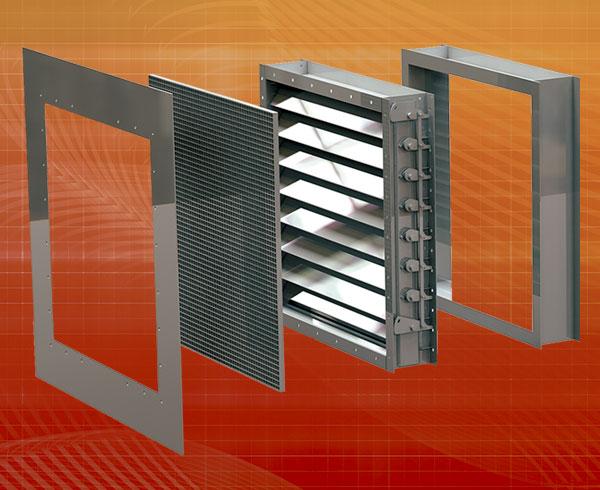
The HVAC system, the complex network that distributes air throughout modern buildings, is a critical component of comfort, but also a potential conduit for danger. This is why specialized safety components like fire safety dampers and blast dampers protection devices are fundamental to passive safety systems. Selecting the right damper is not simply an engineering task; it is a profound choice that dictates the level of life safety and structural resilience in the face of catastrophic events.
What Are Fire Dampers? An In-Depth Overview
Fire dampers are highly engineered to prevent the spread of fire and smoke through the air duct system of a building. Their primary function is fire containment, ensuring that as ductwork penetrates fire-rated walls or floors, the integrity of that barrier is maintained.
These dampers are triggered when heated air, passing through the duct, melts a preset fusible link. That thermal release prompts a spring-loaded or gravity-driven metal curtain or set of blades to snap shut and create a strong fire-rated barrier in the duct for a specific time. They are essential for commercial buildings, hospitals, and any facility that demands compartmentation.
Compliance is not optional; construction standards at the level of UL 555 compliance for North America, along with international equivalents, define the stringent fire-resistance ratings and dynamic closure testing.
We are seeing a significant trend toward motorized fire dampers in UAE commercial buildings. These dynamic systems involve an actuator connected to the BMS; hence, controlled closure against airflow is also possible, something necessary for modern structures that rely on operational HVAC systems to help in smoke control.
Blast Dampers: The Next Generation in Explosion Protection
A blast is essentially a near-instantaneous, very forceful event, as opposed to fire, which is generally thought of as a longer, much more prolonged thermal threat. Blast protection devices, or blast dampers, are designed to mitigate overpressure and impulse waves generated by explosions in high-risk environments. Their role is pure explosion blast protection: to protect critical infrastructure and personnel from physical destruction.
These are not typical dampers but rather fundamentally high-strength mechanical barriers. Features of top-tier models, such as the FC-BRV-21 blast damper, underpin how specialized they must be in design: to achieve ultra-fast closing in milliseconds so as to block the initial blast impulse, they will be made from high-strength, blast-proof materials to resist overpressure in excess of $5$ bar, approximately $72.5$ psi. A shaft-linkage-free design eliminates potential weak points and ensures reliable, rapid closure under extreme duress.
Their critical use cases are within facilities like oil & gas plants, petrochemical refineries, civil defense shelters, and energy facilities where the risk of volatile substance ignition demands robust overpressure control.
Growth of the Blast damper technology in the Middle East energy sector is considered one of the strong demand drivers across the Gulf region, where strategic energy assets call for uncompromised safety dampers. Betec Cad has fire dampers and blast dampers that are designed very well for the needs of such a critical infrastructure sector.
Key Differences Between Fire Dampers and Blast Dampers
While both serve as safety dampers, the operational philosophies are entirely different.
| Feature | Fire Damper | Blast Damper |
| Primary Threat | Heat and spread of flame/smoke | Overpressure wave and blast impulse |
| Operational Distinction | Fire containment (seconds to close) | Blast impulse blocking (milliseconds to close) |
| Construction | Fire-rated components, fusible links | High-strength blast-proof materials, heavy frames |
| Key Certification | UL 555 (Fire Resistance) | EN 1127-1, ATEX (Explosive Atmospheres, Overpressure) |
A fire damper maintains a fire-rated barrier against heat and smoke over time. A blast damper must act in milliseconds to provide explosion blast protection against a physical force, demonstrating the stark contrast between fire and blast hazard mitigation.
How to Choose the Right Damper for Your Safety Needs
Selecting the appropriate device begins with a detailed hazard analysis that factors in the application environment, the specific hazard type (fire, blast, or both), airflow requirements, and, crucially, regulatory compliance. For instance, an office tower requires certified fire safety systems, while a refinery requires both specialised fire and robust explosion blast protection.
It is paramount to seek professional advice and ensure all products are certified. The trend towards Customized fire and blast damper solutions for UAE’s regulatory compliance underscores the need for tailored, site-specific safety plans that adhere to stringent local laws and international standards.
Emerging Trends in Damper Technology and Safety Compliance
Modern safety dampers are integrating into the digital ecosystem of smart buildings. Innovations are focusing on greater energy efficiency, modular systems, and Integration with smart building management systems.
This is best exemplified by the move toward Smart fire dampers with IoT integration for UAE smart buildings. These connected devices move beyond simple on/off status, providing continuous diagnostics, remote testing capabilities, and predictive maintenance alerts. This evolution elevates reliability and ensures continuous adherence to safety systems protocols, reflecting the UAE’s commitment to smart city infrastructure.
FAQs
1. What is the primary function of a fire damper compared to a blast damper?
A. The primary function of a fire damper is fire containment—to automatically close upon heat detection, sealing the duct penetration to maintain the fire-rated barrier of a wall or floor assembly. The goal is to stop the spread of flame and smoke. In contrast, the primary function of a blast damper is explosion blast protection—to close instantaneously to resist and deflect the enormous, transient overpressure wave generated by an explosion, thereby protecting structures and occupants from catastrophic mechanical failure.
2. How fast do blast dampers close compared to fire dampers?
A. The speed difference is fundamental to their application. Fire dampers typically close in seconds after the heat-sensitive element is triggered (or an actuator is commanded), which is sufficient for thermal containment. However, blast protection devices must close in milliseconds because the dangerous blast impulse travels at supersonic speeds. This rapid closure is non-negotiable to achieve effective overpressure control.
3. Can a blast damper also function as a fire damper?
A. Generally, a blast damper is not a direct substitute for a fire damper. While made from robust, blast-proof materials, it lacks the necessary fire resistance ratings and testing (like UL 555 compliance) required to legally function as a fire containment device. Fire dampers must withstand prolonged, high-temperature exposure without losing integrity. In facilities requiring both fire safety systems and explosion blast protection, the best practice is to install certified, purpose-built devices for each specific hazard, or a certified combination fire/blast damper, ensuring all safety dampers meet their respective, stringent standards.
4. What certifications should I look for when purchasing fire or blast dampers?
A. For fire safety dampers, look for UL 555 compliance (for fire endurance) and UL 555S (for smoke leakage control). These define the required fire resistance ratings. For blast protection devices, key certifications are tied to explosive atmospheres and structural resistance, such as the EN 1127-1 standard and the ATEX Directive (governing equipment for use in potentially explosive environments). Always verify that the certification is valid for your intended use and is approved by local regulatory bodies, ensuring true regulatory compliance.
Conclusion
The decision between various safety dampers requires expertise, ensuring your system addresses both fire containment and explosion blast protection. The choice dictates the survival of your assets and, most importantly, the safety of your personnel.
Betec Cad has fire dampers and blast dampers designed very well for the needs of the world’s most demanding sectors. Our engineering excellence delivers advanced products, from dynamic Motorized fire dampers in UAE commercial buildings to the ultra-resilient FC-BRV-21 blast damper.
Contact Betec Cad today to explore our fire dampers and blast dampers tailored for maximum safety, regulatory compliance, and performance in the UAE and beyond. Our experts will help you design the customized fire and blast damper solutions your facility requires.