



The Future of Indoor Air Quality in a Post-Pandemic World

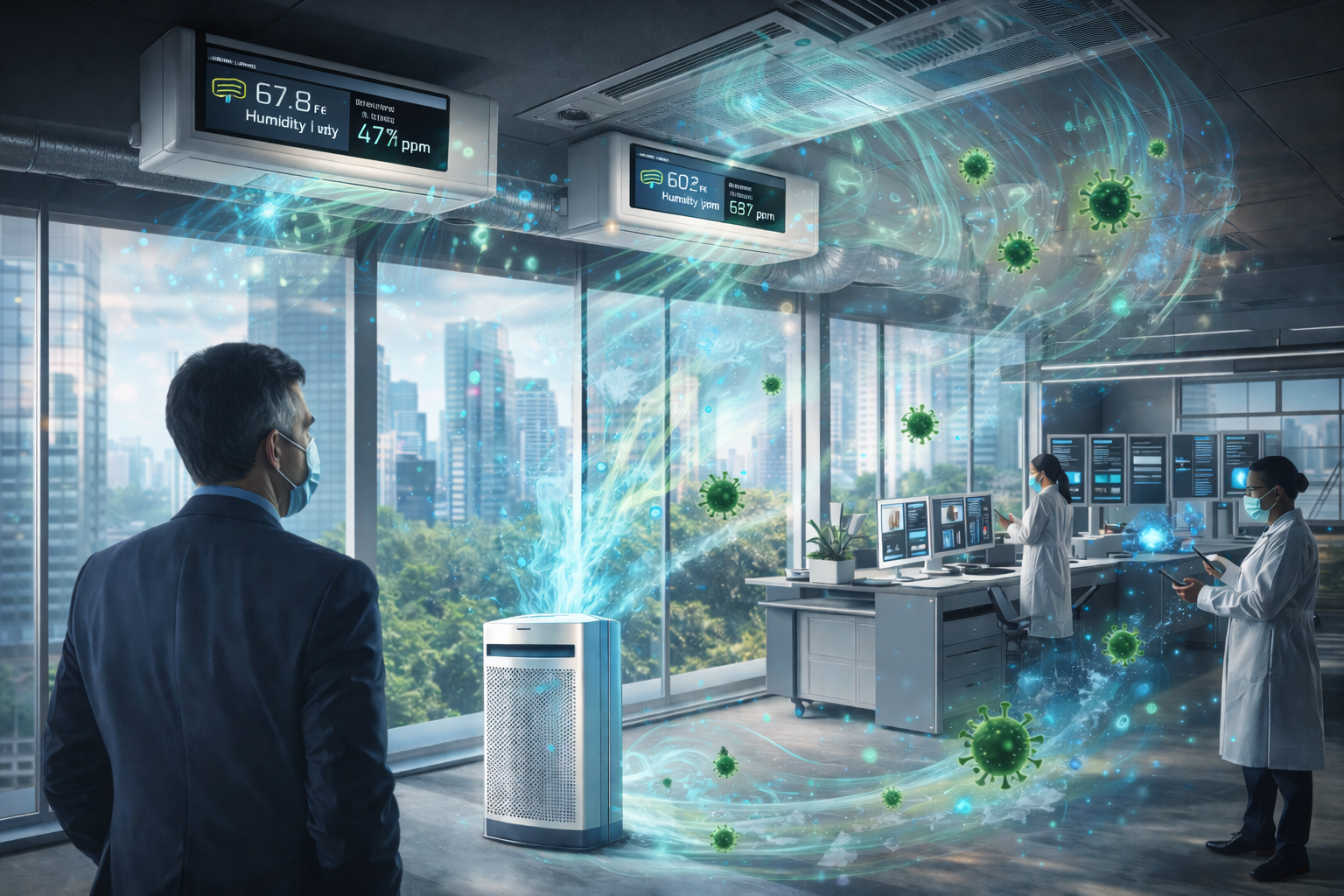
Indoor air quality was once invisible. People noticed it only when something went wrong. The pandemic changed that forever. Today, clean indoor air feels as essential as clean water. Offices, hospitals, tunnels, airports, and industrial spaces can no longer afford to ignore what people breathe every day.
This blog helps to discuss and inform readers about what this means in terms of indoor air quality evolution post-pandemic, what this means in terms of our expectations in this post-pandemic world, and what this means in terms of smart ventilation being a key component to, emerging priorities in air quality, upgrades in ventilation systems, a role in trust through certification, and how future ready solutions contribute to a safe indoor space are some topics you will be introduced to in this course.
Why Indoor Air Quality Became a Global Priority
The pandemic caused a shift in air from merely being comfortable to it becoming critical infrastructure
- People have realized that the suspended particles move faster and for longer periods in the enclosed areas
- Governments have tightened indoor air quality regulations in various sectors of the industry.
- For instance, various industries learned that clean air has a direct link to the health and performance of their workers
- From being a subsidiary system to being a key front-line safety measure
This has generated a demand for indoor air quality management, post pandemic ventilation systems, and air safety compliance.
Ventilation is Now Strategic, No Longer Optional
Design of airflows now affects security, trust, and consistency
- Adequate ventilation helps dilute the pollutants, pathogens, and gases, thereby protecting
- Fresh circulation: Infection risk decreases, cognitive performance improves
- Mechanical ventilation provides regular quality of air even under impermeable environments
- Smart airflow planning helps to realize our commitment to energy efficiency without compromising safety
This is where HVAC ventilation solutions, industrial ventilation systems, and the control of airflow matter.
Certification Driven Confidence in Indoor Air Systems
Proof is more important than promises
- Certified Systems Ensure Performance in Real World Situations
- A number of standards such as AMCA certify the validation of airflow, leakage control, and the ability
- Certified dampers protect critical zones during fire, blast, or gas exposure
- Compliance generates trust among the regulators, the developers, and the end-users
Search engines and buyers are looking for AMCA Certified Products and Flow Control Products with Testing.
From Comfort to Health Focused Air Design
Air quality is also taken into consideration for human well-being, as opposed to temperature
- Clean air eliminates fatigue, headaches, and respiratory strain
- Controlled ventilation reduces exposure to volatile organic compounds
- Well-balanced airflow makes indoor spaces more comfortable without drafts or stagnation
- Health-centric ‘Air Design’ can boost the confidence of the occupants in shared environments
Such change creates demand for a healthier indoor airflow solution and HVAC designs centered on indoor air quality.
Smart Ventilation for Complex Environments
One-size fits all no longer applies.
- Tunnels also need smoke control and pressure management
- Gas tight and blast resistant systems required in industrial plants
- Data centers require precise airflow stability
- Public infrastructures require fail-safe ventilation in emergency situations
For future-ready buildings, custom-engineered ventilation systems are required according to the respective risk scenario.
The Role of Technology in Future Air Quality
Monitoring, Automation, and Accountability
- Sensors help track air quality in real time
- Automated dampers respond immediately to changes
- Data-driven information aids in the improvement of efficiency as well as safety
- Predictive maintenance minimizes downtime and failure
It enables intelligent indoor air quality systems that adapt rather than react.
FAQs
1. What is indoor air quality and why is it important after the pandemic?
A. Indoor air quality refers to the cleanliness and safety of air inside buildings. After the pandemic, it became crucial because airborne transmission highlighted how poor ventilation increases health risks.
2. How does ventilation improve indoor air quality?
A. Ventilation replaces stale air with fresh air, removes pollutants, and controls humidity. Proper airflow reduces pathogen concentration and improves overall indoor safety.
3. Are Certified Ventilation Systems Really Needed?
A. Yes. They provide tested performance, security, and safety guarantees. They minimize the risk and facilitate approvals for projects.
4. What kind of industries need advanced technology in Indoor Air Quality?
A. Various industries, such as infrastructure, tunnels, hospitals, industries, data centers, etc., use well-controlled ventilation in their operations.
Conclusion
Therefore, indoor air quality is not a theoretical future but a tangible, quantifiable, and pressing reality. The post-pandemic environment requires ventilation systems that can support health, regulatory needs, and stress tests. Simply put, clean air is no longer a feature but a function.
Betec Cad offers advanced ventilation and damper solutions that are primarily developed for safe operations in critical conditions. With the help of the most reliable products and precise services, Betec Cad supports safe indoor air for various infrastructures, industrial projects, and commercial applications. Visit our website and get the best suggestions from there. Moreover, you can keep yourself updated with valuable insights on innovations in ventilation and air safety at our official Instagram page!