



HVAC Fire Safety in Data Centers: Dampers and Airflow Control

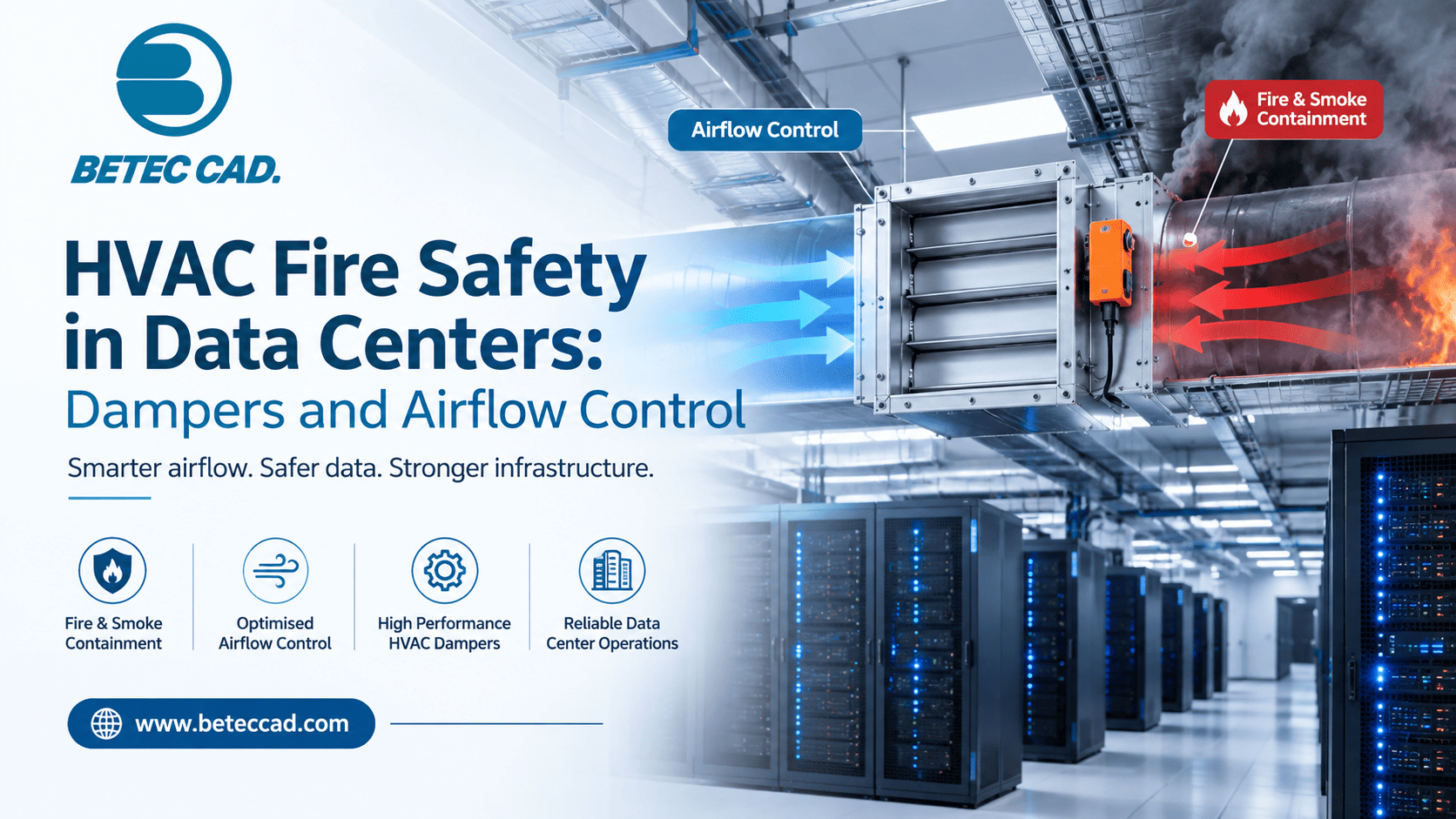
A data center cannot afford a fire to become an airflow problem. As heat is always being produced by the servers and air movement occurs through the HVAC system, the ducts which are responsible for cooling of equipment can be used to move the smoke and heat from one place to another.
Fire dampers and smoke control come into play here and proper care should be taken in order to prevent damage to the equipment as well as the system itself.
Why HVAC Fire Safety Matters in Data Centers
Data centers are built around continuous cooling. A sudden loss of cooling can cause server temperatures to rise rapidly, which means fire protection cannot be designed separately from HVAC operation. NFPA material notes that cooling may need to continue for as long as possible in some fire scenarios, while shutdowns may need to happen in a planned sequence.
At the same time, uncontrolled airflow can move smoke through ducts and spread it beyond the area where the fire started. This makes HVAC airflow control an important part of the overall fire strategy.
How Dampers Help Contain Fire and Smoke
Fire dampers
A fire damper acts as a barrier inside an HVAC duct when a fire condition occurs. Its purpose is to help stop flames and hot gases from travelling through ductwork and crossing fire-rated walls or other protected areas.
The UAE Fire and Life Safety Code requires fire dampers in several duct and air-transfer openings that pass through fire-rated barriers. The required rating depends on the fire resistance of the construction being penetrated.
For critical facilities, selecting from the best fire dampers is not simply about choosing the highest rating. The damper must match the actual airflow, pressure, installation location and fire strategy of the building.
Smoke and combination dampers
Fire and smoke are not the same problem. A fire damper primarily deals with heat and flame, while smoke dampers are designed to limit the movement of smoke.
Combination fire-smoke dampers can provide both functions where the design requires them. UL guidance also distinguishes between dampers used in systems that remain operational during a fire and those used when HVAC systems shut down.
Airflow Control: The Part That Often Gets Overlooked
Normal operation vs fire operation
A data center HVAC system needs precise airflow during normal operation, but its response during a fire must also be clearly defined. Dampers may need to close, remain open or change position depending on the fire zone and the intended smoke-control strategy.
This is why airflow should not be treated as a simple on/off function. The expected combinations of open and closed dampers can affect pressure across the system, and damper performance needs to be checked against those conditions.
Keeping cooling and fire systems coordinated
The fire alarm, HVAC controls and dampers need to work together. A Reddit discussion from HVAC professionals highlights a common design issue: fire dampers, smoke dampers and their control systems serve different purposes and should not be selected simply because they look similar.
For data centers, this coordination becomes even more important because an unnecessary HVAC shutdown can affect server operation, while uncontrolled airflow can interfere with fire containment.
What Should Data Center Operators Check?
- Damper selection: Ensure the damper type, fire rating and airflow rating suit the application.
- System integration: Confirm that dampers, fire alarms and HVAC controls respond correctly to the intended fire sequence.
- Accessibility: Dampers need suitable access for inspection and maintenance. UAE requirements specifically address access and identification.
- Testing: Do not assume that an installed damper will perform correctly. It should be inspected and tested as part of the overall fire-safety system.
- Airflow planning: Consider what happens when multiple dampers close or open during a fire, rather than checking each damper in isolation.
FAQs
1.Are fire dampers necessary in data centers?
A. They may be required where HVAC ducts pass through fire-rated walls, floors or other protected barriers. The exact requirement depends on the building design and applicable UAE fire-safety provisions.
2.Do fire dampers stop smoke?
A. A fire damper is primarily intended to limit fire and heat spread. Where smoke control is required, a smoke damper or combination fire-smoke damper may be needed.
3.Can shutting down HVAC during a fire cause another problem?
A. Yes. Data center equipment can heat up quickly when cooling stops. Fire and HVAC systems therefore need a planned response rather than an automatic assumption that every cooling unit should immediately shut down.
Conclusion
Data center fire safety depends on more than fire detection and suppression. Proper dampers, controlled airflow, coordinated HVAC operation and regular testing work together to prevent fire and smoke from travelling through the building while supporting the cooling needs of critical equipment. Working with experienced best HVAC manufacturing companies in the UAE can help ensure these requirements are considered from design through installation.
For dependable fire and airflow control solutions, BETEC CAD provides life-safety dampers and HVAC products for critical environments, including data centers. As one of the best HVAC manufacturing companies in the UAE, BETEC CAD combines engineered solutions with tested performance for demanding applications.
Follow us on Instagram.