



What Is a Smoke Damper and How Does It Work?

Fire safety encompasses much more than extinguishing flames. Smoke, in many circumstances, spreads more rapidly than fire itself. Smoke, therefore, is typically a larger emergency threat. HVAC systems, therefore, incorporate features that assist in controlling the spread of smoke as well as the protection of egress routes. Among these components is a smoke damper. Smoke dampers are particularly advantageous as they remain in an inactive state until they are absolutely necessary.
Having knowledge of how smoke dampers function allows managers of many different types of buildings (commercial, hospital, retail, offices, etc.) to ensure occupants’ safety as well as the optimal design of the building’s HVAC system.
What Is A Smoke Damper?
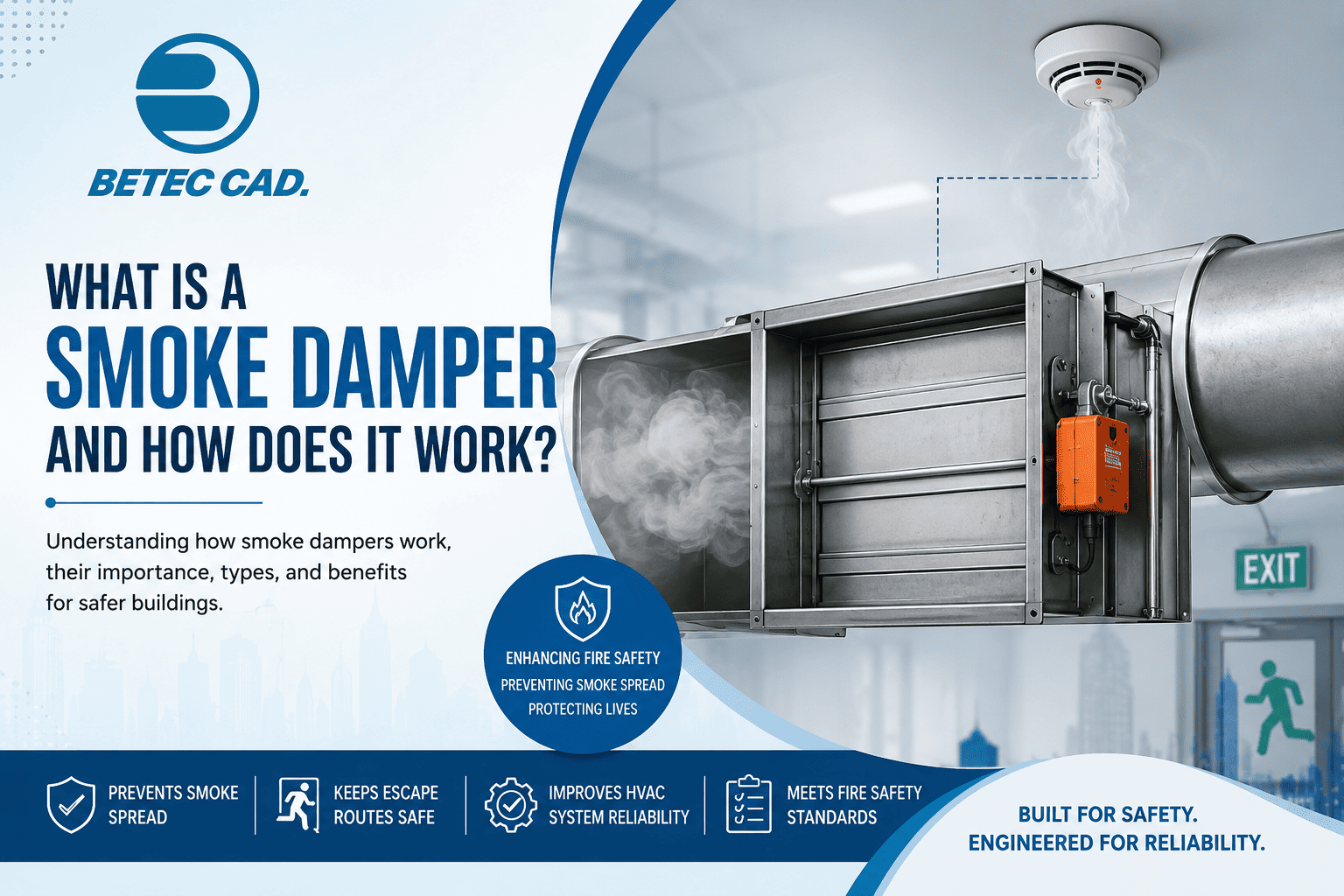
Smoke dampers are devices that are positioned within an HVAC duct system to prevent the flow of smoke through the ventilation of a building during a fire. Under typical operation of the system, smoke dampers remain fully open and do not disrupt the flow of air. However, upon the detection of smoke, a smoke damper will fully close and prevent the flow of smoke from one compartment of a building to another.
Smoke dampers are critical as they are an integral component of fire protection systems. Without smoke dampers, smoke would rapidly fill even the most distant rooms, thereby diminishing visibility and creating a significant threat to the evacuating occupants.
How Does A Smoke Damper Work
A smoke damper works through a simple yet highly reliable process.
Smoke detection
The smoke detectors integrated and interconnected with the building’s fire alarm system are continuously monitoring the environment. Detection of smoke will send a signal to the damper.
Automatic closure
The signal will cause the actuator in the damper to close the blades. For a motorised smoke damper, this will be done with the help of an electric motor, facilitating the operation with great speed and precision.
Prevents smoke from spreading
With the closure of the damper, a complete seal and barrier is formed in the duct. This will ensure that smoke is contained and will not flow to the other unexposed areas of the building. This will also limit the smoke damage that would otherwise occur throughout the building and will help keep the evacuation routes safe.
Resetting after emergency
The motorised smoke damper can be reset to its normal position after the fire is contained and the system has been checked.
Why Are Smoke Dampers Important
Installing a smoke damper offers several important benefits.
- They limit the speed of smoke flow in HVAC ducts during emergency situations.
- They keep escape routes for building occupants safer.
- They lessen the damage smoke inflicts on interior building equipment and other structures surrounding the building.
- They ensure the building meets fire safety and building code requirements.
- They improve the overall safety and reliability of the building’s HVAC system.
To meet safety standards, several HVAC systems manufacturing companies have developed new smoke dampers with improved functionality. These new open/close dampers have enhanced operational speed, durability, functionality, and better sealing.
Where Are Smoke Dampers Commonly Installed
You will usually find smoke dampers in buildings where large HVAC systems connect multiple rooms or floors. They are commonly installed in:
- Commercial office buildings
- Hospitals and healthcare facilities
- Hotels
- Shopping malls
- Airports
- Educational institutions
- Industrial facilities
- High-rise residential buildings
Many of the top HVAC companies in UAE recommend placing dampers at key duct locations where smoke could otherwise travel between fire compartments.
Why Motorised Smoke Dampers Are Becoming A Preferred Choice
As buildings become smarter, traditional dampers are increasingly being replaced with the motorised smoke damper because of its improved performance.
Faster response
Motor-driven actuators react quickly when smoke is detected, reducing the time available for smoke to spread.
Better integration
Modern dampers easily connect with fire alarm systems and building management systems, allowing coordinated emergency responses.
Easier maintenance
Many motorised units can be tested without dismantling ductwork, making routine inspections simpler.
Reliable performance
The consistent operation of a motorised smoke damper makes it suitable for critical facilities where safety cannot be compromised.
Choosing The Right Smoke Damper
Not every smoke damper is suitable for every building. Before selecting one, consider factors such as:
- Building type and occupancy
- HVAC system design
- Fire safety regulations
- Compatibility with existing fire alarm systems
- Maintenance accessibility
- Product certifications and testing standards
Working with experienced suppliers and the top HVAC companies in UAE helps ensure that the selected damper performs reliably throughout its service life.
FAQs
1. Does a smoke damper stop fire as well?
A. No. A Smoke damper is specifically designed to prevent the movement of smoke. Fire dampers and combination fire-smoke dampers are designed to resist flames.
2. How often should smoke dampers be tested?
A. Most industry standards recommend periodic inspections and operational testing to ensure the damper functions correctly. The exact schedule depends on local regulations and the type of building.
3. Are smoke dampers only required in high-rise buildings?
A. No. Any building with interconnected duct systems may require smoke dampers depending on its design and local fire safety regulations.
4. Do motorised smoke dampers require electricity all the time?
A. No. A Motorised smoke damper only consumes power when operating or during testing. Under normal conditions, it remains in its designated position without continuous energy use.
Conclusion
A Smoke damper plays a vital role in protecting lives by preventing smoke from spreading through HVAC ducts during a fire. Whether you choose a standard model or a Motorised smoke damper, selecting the right solution helps improve building safety, supports regulatory compliance, and enhances the overall reliability of your HVAC system. This is why leading HVAC manufacturing companies continue to focus on developing safer and more efficient damper technologies.
If you’re looking for high-quality smoke control solutions, Betec CAD delivers reliable HVAC products designed for modern buildings. As one of the trusted names among the Top HVAC companies in UAE, we help you build safer, smarter, and more efficient ventilation systems.
Follow us on Instagram