



NFPA 80 vs NFPA 105: Which Standard Applies to Fire and Smoke Dampers?

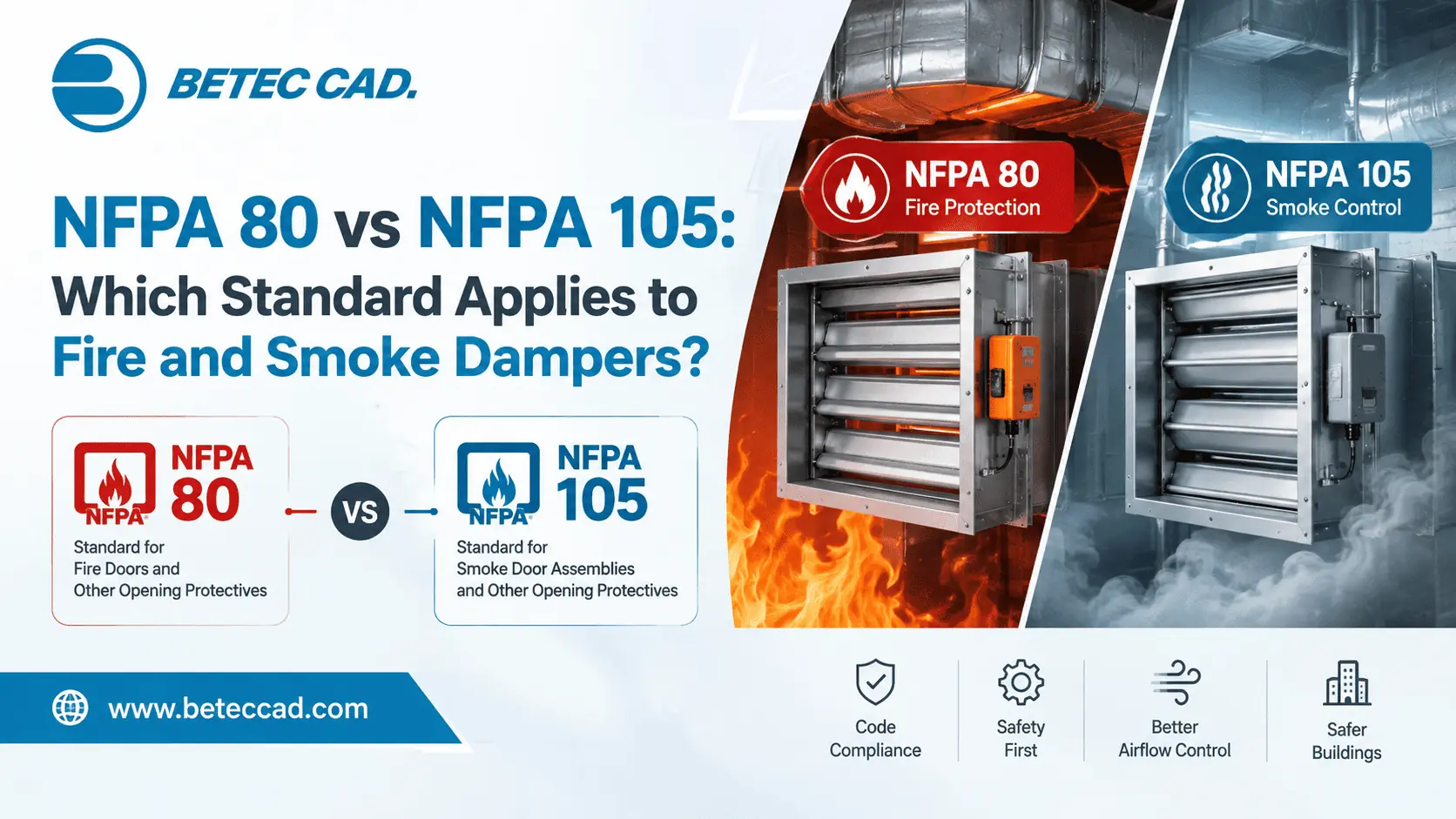
A damper may look like a basic component of an HVAC system, but when there is a fire or smoke event, the standard it was built and maintained to matters. Choosing between NFPA 80 and NFPA 105 is not a matter of preference. It depends on what the damper is meant to control, where it is located, and what protection the building requires.
For design and construction professionals, understanding the difference helps avoid incorrect specifications, failed inspections and, more importantly, gaps in life safety.
NFPA 80 vs NFPA 105: What Do They Cover?
The two standards deal with different forms of protection, although their applications can overlap.
NFPA 80: Fire Protection
NFPA 80 is a standard dealing with fire doors and other opening protectives. It covers fire and combination fire and smoke dampers and fire preventing services. It also includes installation, operational tests, inspections and maintenance of these dampers.
The primary purpose of the fire dampers is to stop the fire from travelling through a duct or air-transfer openings of a fire rated wall, floor or other type of barrier. Typically, fire dampers ought to be tested and approved to meet UL 555.
NFPA 105: Smoke Protection
NFPA 105, Standard for Smoke Door Assemblies and Other Opening Activities, addresses smoke dampers and combination fire-smoke dampers where the goal is to restrict smoke movement. It also covers their installation, testing, inspection and maintenance.
Smoke dampers are usually tested to UL 555S and are designed to respond to a control signal, such as one from smoke detection or fire alarm system, rather than simply relying on heat.
So, Which Standard Applies?
- Fire damper: NFPA 80
- Smoke damper: NFPA 105
- Combination fire-smoke damper: Both NFPA 80 and NFPA 105
This matters because a combination damper must address both fire and smoke movement. UL Solutions notes that combination fire/smoke dampers must comply with the requirements of both Standards.
NFPA 80 or 105 does not specify all the locations where dampers should be installed. The regulation may be specified by other fire standards (like NFPA 90A or the current building and fire codes) and construction practices. In the UAE, an Fire and Life Safety Code references to both NFPA and other standards.
Why the Difference Matters in HVAC Design
The difference is easiest to see by looking at the barrier the duct passes through:
- Fire-rated barrier: The duct may need a fire damper, to prevent fire from travelling through the opening.
- Smoke barrier: The duct needs a smoke damper, to prevent smoke from spreading from one area to another.
- Barrier requiring both: A combination fire/smoke damper can be installed, depending on the project code and design.
Testing And Maintenance
Choosing the right type of damper is only the first step. If a damper does not close when required, it is not providing the protection it was designed for.
NFPA 80 gives you inspection, testing and maintenance requirements for fire dampers. NFPA 105 gives you those requirements for smoke dampers. Both standards place importance on operational testing and maintaining access to the damper and its operating components.
For this reason, access panels should not be treated as an afterthought. A correctly specified damper that cannot be inspected or maintained can create a serious practical problem later.
FAQs
1. Can a fire damper replace a smoke damper?
A. No, not necessarily. A fire damper and a smoke damper are two different devices and are tested for different things. When both types of protection are required, a listed combination fire-smoke damper can be specified depending on the code.
2. Does every HVAC duct need a fire or smoke damper?
A. No. Damper requirements depend on the type of barrier being penetrated, the building design, the HVAC arrangement and the applicable code. Dampers should be checked against the barrier and design intent so they are neither missing nor over-specified.
3. Are fire and smoke dampers the same product?
A. No. While both are life-safety dampers, their functions and testing requirements differ. A combination fire-smoke damper is specifically designed to address both functions.
Conclusion
NFPA 80 covers the fire protection aspect of fire dampers, and NFPA 105 covers smoke protection. Combination fire-smoke dampers take both standards into consideration, and then NFPA 90A and the local UAE requirements will determine the location and application of dampers.
Betec CAD specializes in life-safety and HVAC solutions, offering engineered damper solutions for demanding applications. Browse our product range or contact us for help selecting the right solution.
Follow us on Instagram.