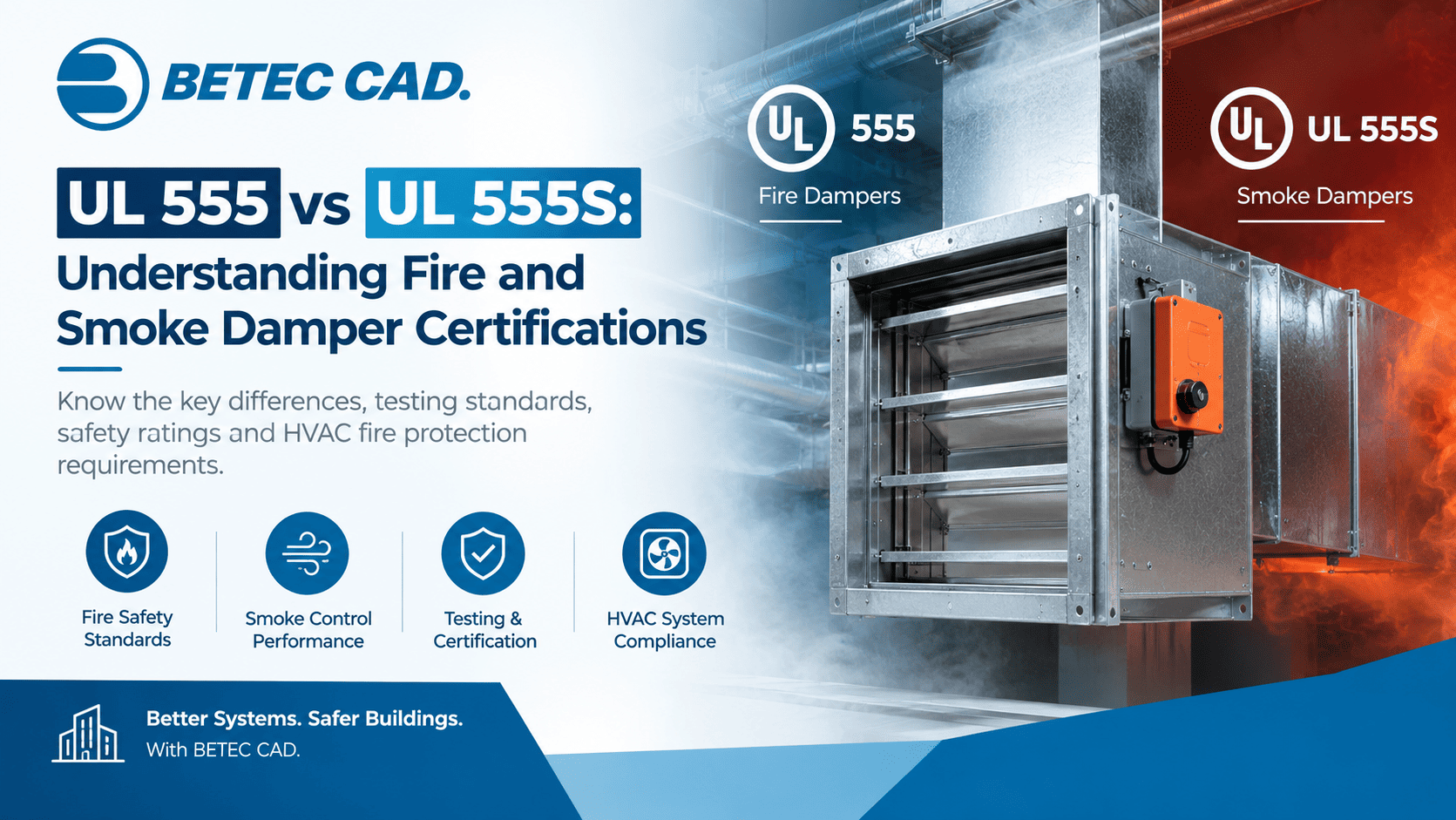
UL 555 vs UL 555S: Understanding Fire and Smoke Damper Certifications

Fire safety in buildings involves much more than simply detecting fire. The smoke from fire can spread to distant places from the source of fire in ducts. Even if fire is contained within a particular room, smoke can be harmful to the health of occupants of the structure. Hence, it is important to choose the right damper. However, there are various certifications, tests and ratings that can make the task of identifying the right product difficult.
There are two main standards applicable to smoke and fire dampers which provide relevant information about the performance of dampers during smoke and fire incidences. Understanding the difference between them will help engineers, contractors and everyone else in making the right decisions for the building.
What is UL 555?
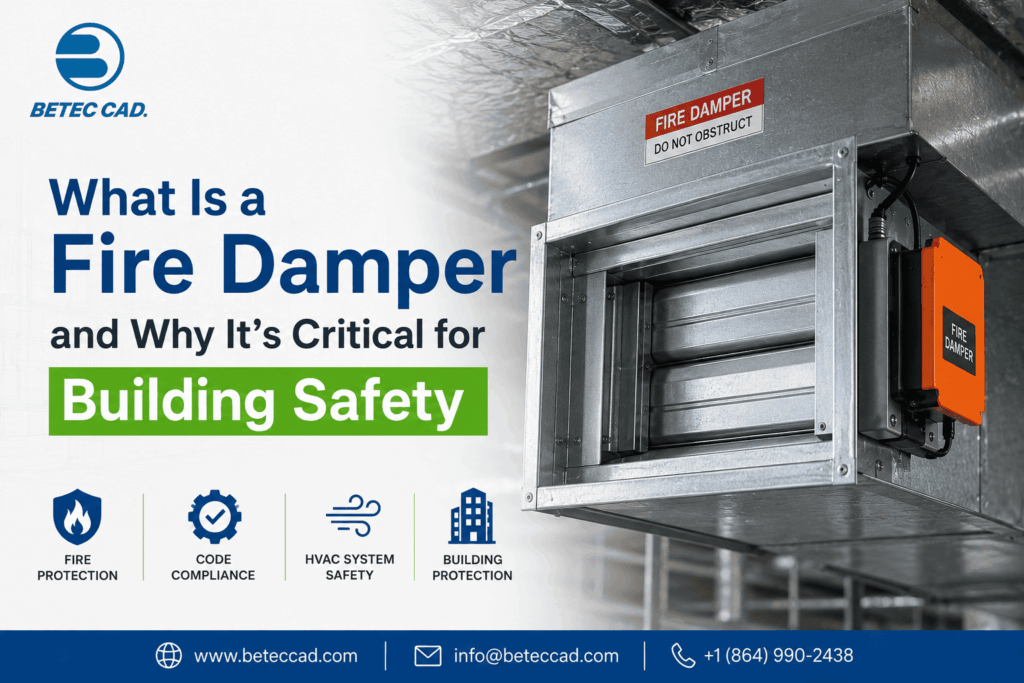
UL 555 is the Standard for Safety of Fire Dampers. It evaluates how fire dampers perform when exposed to fire conditions. These fire dampers are kept wherever the air ducts pass through fire-rated walls, floors or other barriers. This will help in keeping the fire from spreading to other parts of the building.
A fire damper is usually activated through the heat response mechanism, which closes the damper and minimizes the spread of fire. It can also be tested to close under high temperatures caused by the heated air.
The UL 555 fire damper approval has adopted rules regarding its performance, including fire resistance, installation method, airflow, and pressure regulations. To obtain the needed protection, the installation of the damper must be conducted according to its manual.
What is UL 555S?
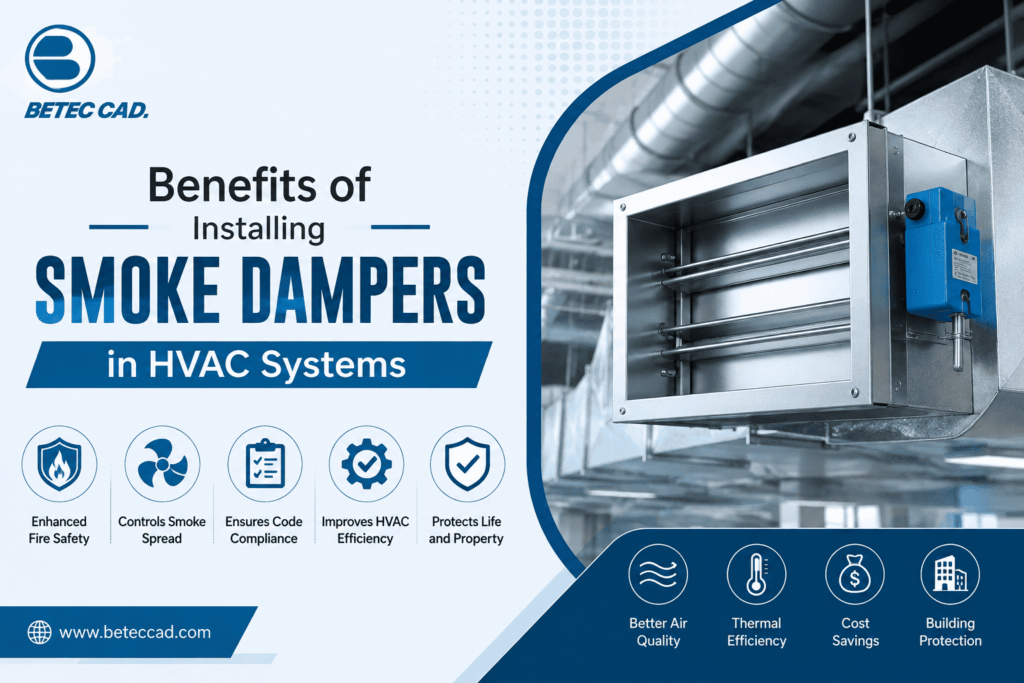
UL 555S is for smoke dampers. It is the standard for safety of smoke dampers. This evaluates how the smoke dampers will stop the smoke from moving through the HVAC systems in a building.
Smoke dampers are used where ducts pass through smoke barriers or where HVAC equipment forms part of an engineered smoke-control system. They commonly operate through an actuator controlled by a smoke detection or building safety system.
The UL 555S certification of smoke dampers includes evaluation of many features including air leakage, operational performance, and performance at specified temperature and air flow conditions. Leakage ratings provide information about the air that can pass through the closed damper under test conditions. It is believed that lower leakage results in better smoke control.
UL 555 vs UL 555S: Key Differences
Although both standards support building fire safety, they address different risks.
| Feature | UL 555 | UL 555S |
| Primary Purpose | Restricts fire spread through duct openings | Restricts smoke movement through HVAC systems |
| Main Focus | Fire exposure and closure performance | Smoke leakage and operating performance |
| Typical Application | Ducts crossing fire-rated barriers | Ducts crossing smoke barriers |
| Important Ratings | Fire-protection rating and application airflow limits | Leakage class, temperature rating and applicable airflow limits |
| Typical Mechanism | Heat-responsive closure or approved operating mechanism | Often actuator-operated through a control system |
The main difference between UL 555 and UL 555S is that neither of the certifications can replace the other.
When Do You Need Both Certifications?
Some locations require protection against both fire and smoke. In these situations, a combination fire-smoke damper may be appropriate.
Combination fire-smoke dampers
These dampers meet the UL 555 and UL 555S standards and are usually used in situations where ducts go through barriers needing to be fire-resistant and limiting the movement of smoke.
Still, having both certifications does not mean using the product in every case. Its ratings, size, positioning, and installation requirements must match the criteria of the project.
What Should You Check Before Selecting a Damper?
Before you choose one specific damper, look through these following points –
- Building requirements: See if your building needs fire protection or smoke protection more or if it needs both.
- System operation: Think if you want fans to shut down when there’s a fire or if they should continue running.
- Required ratings: Find out as much as possible about the fire-protection rating, leakage class, temperature rating and other points before you make a choice.
- Product listing: Check the certification and approved applications, don’t just rely on what the product brochure says.
- Installation and maintenance: Make sure you follow the guidelines given by the manufacturer and meet the requirements established by your authorities.
For projects in UAE, engineers should also verify the local fire safety and life-safety requirements with the relevant authority. UL certification is a major reference for product performance and does not, in itself, assure compliance with all local rules.
FAQs
1. Can a UL 555 fire damper replace a UL 555S smoke damper?
A. Not automatically. A fire damper is evaluated for fire-related performance, while a smoke damper is evaluated for smoke-control performance. The specified application determines which certification is required.
2. Does a combination fire-smoke damper need both certifications?
A. Yes. Combination fire-smoke dampers are evaluated against the applicable requirements of both UL 555 and UL 555S.
3. Does UL 555S certification guarantee zero smoke leakage?
A. No. Certified dampers have specified leakage limits. The actual performance depends on the damper’s rating and the conditions under which it was tested.
Conclusion
Understanding UL 555 vs UL 555S helps project teams distinguish between fire containment and smoke control. Selecting the right certification, checking the approved ratings and following installation requirements are essential to effective HVAC fire protection.
At Betec Cad, we understand the importance of reliable HVAC solutions and informed product selection. Contact us to find suitable solutions for your building.
Follow us on Instagram.