
Why ATEX Rated Dampers Are Critical in Explosive Environments

In industries where a single spark can trigger a disaster, safety isn’t just about prevention. It’s about containment. Explosive environments don’t give second chances and that’s exactly why every component in the system needs to be built with risk in mind.
ATEX rated dampers are one of those components people tend to overlook until something goes wrong. If your ventilation system isn’t designed to handle explosive conditions, it becomes part of the problem. This blog will tell you why these dampers are critical and where they actually make a difference.
What are ATEX Rated Dampers?
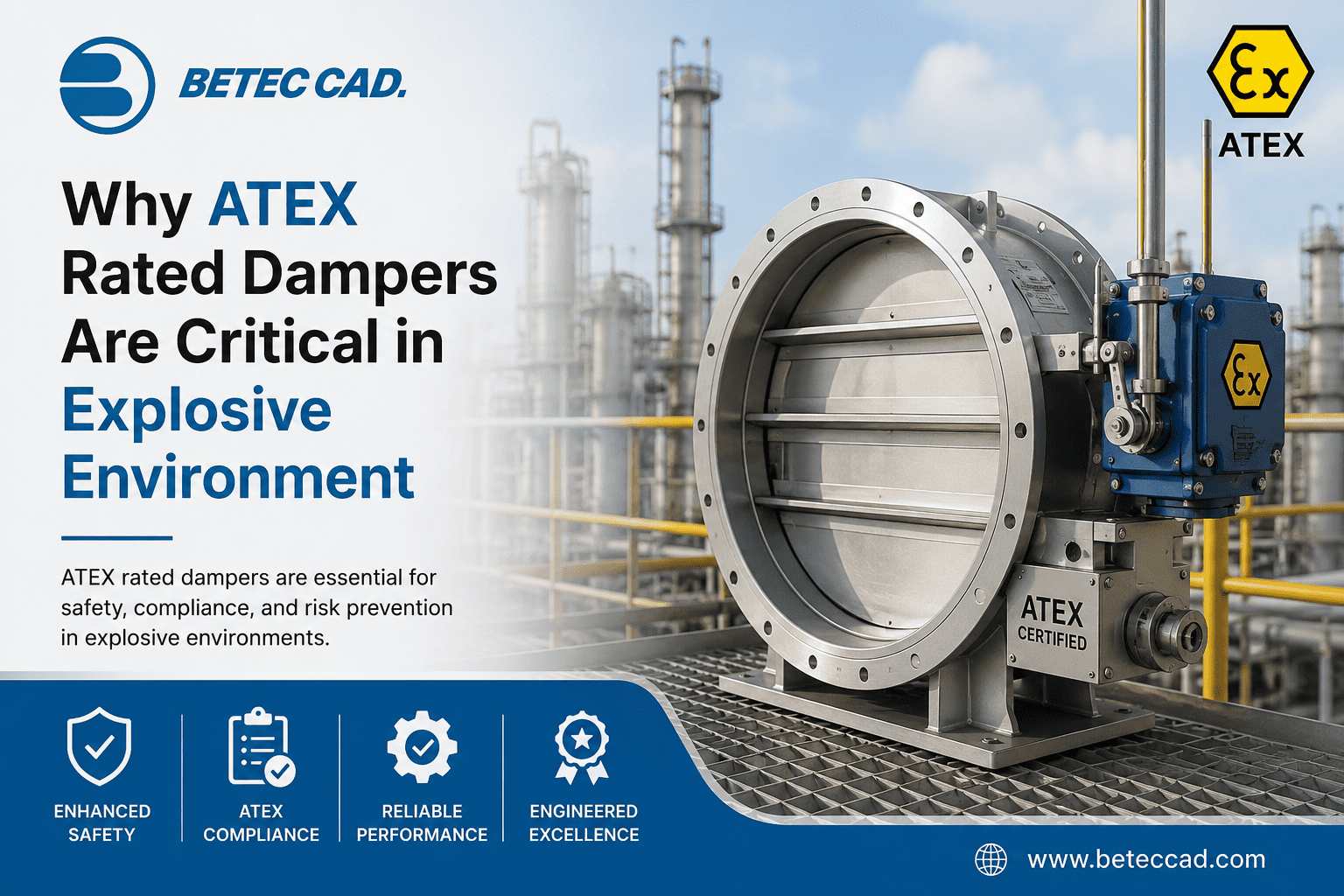
ATEX rated dampers are specially designed HVAC components built to operate safely in explosive atmospheres. They comply with ATEX directives, which regulate equipment used in environments with flammable gases, vapors or dust.
These dampers are engineered to prevent ignition and control the spread of flames or pressure within duct systems. That’s why industries operating in high risk zones rely on the best ATEX rated dampers instead of standard alternatives that aren’t built for such conditions.
Why are ATEX Rated Dampers Critical
Explosion contamination
ATEX dampers help isolate sections of ductwork during an explosion, preventing the blast from spreading across the facility.
Fire prevention
They are designed with materials and mechanisms that minimize the risk of sparks, which is crucial in volatile environments.
Regulatory compliance
Using certified dampers ensures that facilities meet safety standards and avoid legal or operational issues. Many companies search for the best place to buy ATEX rated dampers to ensure compliance without compromise.
System protection
Beyond safety, these dampers protect HVAC systems from severe damage, reducing downtime and repair costs.
Key Features of ATEX Rated Dampers
- Anti-spark construction – These dampers are built using materials that reduce friction and eliminate spark generation.
- Pressure resistance – They are designed to withstand sudden pressure changes caused by explosions.
- Sealed design – A tight sealing mechanism ensures that hazardous gases or flames do not pass through the duct system.
- Durability – Facilities that invest in the best ATEX rated dampers benefit from long-term reliability even in extreme operating conditions.
Where are ATEX Rated Dampers Used?
- Oil and gas industries
- Chemical processing plants
- Pharmaceutical manufacturing units
- Grain storage and processing facilities
- Paint and coating industries
- Nuclear Power Plants
In these sectors, choosing the best place to buy ATEX rated dampers is less about cost and more about ensuring certified, tested safety equipment.
Benefits of ATEX Rated Dampers
- Reduces risk of explosion spread
- Enhances workplace safety
- Ensures compliance with international safety standards
- Protects equipment and infrastructure
- Minimizes operational downtime
When sourced from trusted suppliers offering the best ATEX rated dampers, these benefits translate into real-world safety and efficiency.
FAQs
1. What does ATEX stand for?
A. ATEX refers to European directives that regulate equipment used in explosive atmospheres.
2. Are ATEX Dampers mandatory?
A. In many industries dealing with flammable substances, they are required to meet safety regulations.
3. Do ATEX Dampers require special installation?
A. Yes. Improper installation can compromise their effectiveness, even if the product itself meets standards.
4. Are all ATEX Dampers the same?
A. Not really. Quality, design and performance vary, which is why companies focus on sourcing the best ATEX rated dampers rather than generic options.
Conclusion
ATEX rated dampers are not optional in explosive environments. They play a direct role in preventing disasters, protecting systems and ensuring compliance. From containing blasts to reducing ignition risks, their importance goes beyond basic HVAC functionality.
If safety is a priority, Betec Cad delivers solutions built for demanding environments.
Follow us on Instagram.