
Why VAV Technology Is Essential for Modern Building Automation

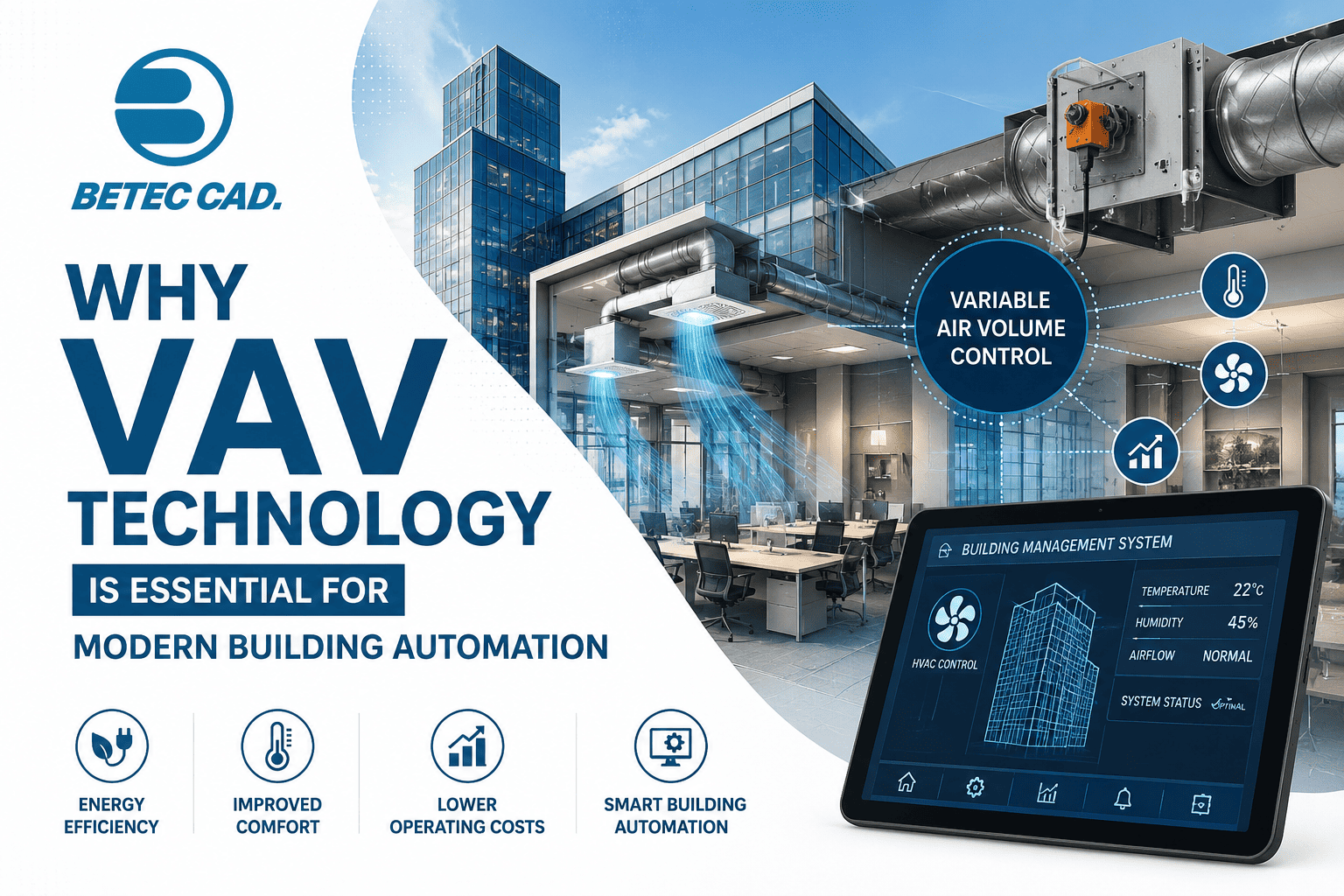
In modern buildings, everyone wants to stay comfortable, save energy, reduce operating costs and support smarter building management. This is why HVAC technologies are very important in modern buildings. These HVAC systems are there in commercial buildings, offices, hospitals, hotels and educational institutions. Among these HVAC systems, the variable air volume system has become one of the most reliable solutions for efficient air distribution.
As buildings become smarter, choosing the right HVAC solution is very important.
What is VAV Technology?
A variable air volume system is an HVAC system that adjusts the amount of air that is being delivered to different parts of the building based on how much the cooling and heating the room needs.
With traditional systems, they supply air all the time to all the rooms. But VAV technology changes whenever each room needs changes and not all the time.
This system uses sensors, thermostats, dampers and a central control unit to maintain the temperature without wasting energy.
Why Do Modern Buildings Depend On VAV Technology?
Better energy efficiency
One of the benefits of VAV systems is the opportunity to reduce wasteful energy consumption. If fewer people occupy an office space or meeting room, the system can simply throttle back air delivery and instead of trying to cool the space completely, only provide the necessary amount of cooled air. Reducing the fan power needed, the cooling load and electricity consumed, can pay significant daily dividends.
Improved indoor comfort
Every room in a building needs amounts of cooling. For example, a conference room with people needs cooling more than an empty office.
With the air control system each area gets just the right amount of air. This keeps temperatures steady. Stops people from complaining about rooms being too hot or too cold.
The variable air volume control makes sure each zone receives what it needs.
This way temperatures are consistent, throughout the building.
Lower operating costs
Because equipment works only when needed, building owners experience lower utility bills and reduced wear on HVAC components.
Over time, the savings generated by a variable air volume system often offset the initial investment, making it a cost-effective solution for commercial buildings.
How VAV Supports Building Automation
Building automation systems need to know what is going on now to control things like the lights, security, ventilation and heating and cooling. Variable air volume technology works well with these systems.
The variable air volume control system does not work alone; it is always talking to the building management system. It reacts to how many people are in the building, how hot or cold it is, how humid it is and what time it is supposed to be working.
This makes the building work better. People do not have to get involved as much. Variable air volume technology and building automation systems like this make things easier. Building automation systems and variable air volume control systems are important for buildings.
Benefits of Installing VAV Systems
- A variable air volume system provides precise temperature control for multiple building zones.
- It helps reduce electricity consumption by supplying only the required airflow.
- Better variable air volume control improves occupant comfort throughout the building.
- Lower fan speeds reduce equipment stress and extend the lifespan of HVAC components.
- The system adapts easily when office layouts or occupancy levels change.
- It integrates smoothly with modern building management and automation platforms.
- Maintenance becomes more predictable because equipment operates more efficiently.
Where Are VAV Systems Commonly Used
VAV technology works especially well in buildings where occupancy and cooling loads change throughout the day.
Office buildings
Meeting rooms, workspaces, cafeterias, and reception areas all have different cooling demands. A variable air volume system adjusts airflow independently for every zone.
Hotels
Guest rooms, restaurants, conference halls, and lobbies require different temperatures at different times. VAV technology improves guest comfort while reducing operating costs.
Hospitals
Healthcare facilities require precise environmental control. Reliable variable air volume control helps maintain stable indoor conditions across patient rooms, laboratories, and operating areas.
Educational institutions
Schools and universities benefit from energy savings because classrooms, libraries, and auditoriums rarely have the same occupancy throughout the day.
Choosing The RIght HVAC Partner
Installing a VAV solution is only part of the process. The quality of manufacturing, engineering, and system design also plays an important role in long-term performance.
Many businesses searching for reliable HVAC manufacturing companies in the UAE look for manufacturers that offer advanced automation, quality testing, energy-efficient designs, and dependable technical support. Betec Cad also helps ensure that every variable air volume solution is properly designed for the building’s requirements.
Companies like Betec Cad focus on delivering engineered HVAC solutions that meet modern commercial building standards while supporting energy-efficient automation systems.
FAQs
1. What is the difference between a VAV system and a constant air volume (CAV) system?
A. CAV system supplies the same amount of air continuously, while a variable air volume system adjusts airflow according to the cooling or heating demand of each zone.
2. Does a VAV system save electricity?
A. Yes. Since airflow changes based on actual demand, energy consumption is significantly lower than traditional fixed-airflow systems.
3. Does installing a VAV system require replacing the entire HVAC system?
A. Not always. In many projects, existing HVAC infrastructure can be upgraded depending on the building’s design and equipment compatibility.
4. Do VAV systems require frequent maintenance?
A. Routine maintenance is still necessary, but efficient operation often reduces wear on major HVAC components compared to fixed-airflow systems.
Conclusion
Modern buildings need HVAC systems that can do more than simply cool or heat a space. A well-designed variable air volume system improves comfort, reduces energy consumption, supports automation, and helps building owners lower long-term operating costs. Combined with intelligent variable air volume control, it has become an essential part of efficient commercial building design.
If you’re looking for reliable HVAC solutions from one of the trusted HVAC manufacturing companies in the UAE, Betec Cad delivers advanced systems built for performance, efficiency and reliability.
Follow us on Instagram.